
OBM makes change measurable
Organizational Behavior Management, OBM, helps leaders and organizations understand why people do what they do and how the right behaviors can be reinforced so that change actually lasts.
Knowledge on its own rarely changes daily work. What makes a difference is what people actually do, how often they do it and what in their surroundings makes the behavior more or less likely. That is where OBM becomes useful.
Part of Bisevo, the platform for behavior change. The same engine also powers system integration, gamification, e-learning and pulse surveys.
Concrete behaviors and clear expectations
Organizational Behavior Management is a way to understand and influence behavior in organizations. Instead of talking in general terms about people needing to be more engaged, responsible or motivated, OBM helps leaders get concrete.
What do we actually want to see more of? How does it show in daily work? What happens before and after the behavior? And how can we reinforce what really contributes to better collaboration, a stronger culture or higher quality?
Make it observable
Describe behaviors so concretely that you can see what happens in practice.
Understand the context
Look at what triggers behaviors and which consequences make them repeat or disappear.
Reinforce the right things
Put your energy into what helps people succeed more often, instead of only reacting when something goes wrong.
Clearer leadership, less chance
Many leaders work hard on change but still get uneven results, often because the goals are too abstract, the feedback comes too late or the wrong behaviors are reinforced by mistake.
OBM makes these mechanisms easier to see. When leaders understand how behaviors are shaped in daily work, it is easier to create better conditions for performance, collaboration and the work environment.
What OBM solves
OBM is especially useful when you want new ways of working to stick, improve leadership, increase participation in important activities or understand why good intentions so often fail to show up in daily work.
That is why OBM is often a strong complement to training, gamification, pulse surveys and change management.
From theory to behavior
Three steps to OBM in practice
Get concrete
Describe behaviors so that everyone understands what is meant. The clearer the behavior, the easier it is to follow up.
Observe patterns
Look for what triggers behaviors and what seems to make them come back. That is often where the real key is.
Reinforce deliberately
Put more energy into acknowledging and reinforcing what you want to see more of, instead of only reacting to deviations.
Where OBM makes the biggest difference
Leadership
Give managers a more concrete language for feedback, follow-up and reinforcement in daily work.
Change work
Make new ways of working stick by following up behaviors, in addition to communicating goals.
Culture
Make culture more concrete by focusing on the actions that actually build it.
Collaboration
Make visible the behaviors that strengthen collaboration between teams and functions instead of hoping for better chemistry.
Learning
Tie training closer to everyday behaviors so that the knowledge lives on after a course or workshop.
Follow-up
Follow what can be observed, influenced and reinforced in daily work.
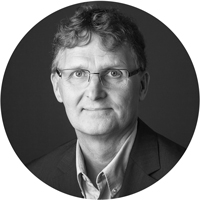
“Motivation is a result!”
The foundation: research and proven experience
Bisevo’s way of working is based on OBM (Organizational Behavior Management), the method that Leif Andersson, licensed psychologist and author of the book Psykologi för ledare, has contributed to and shared knowledge about in one of Bisevo’s webinars.
The same thinking runs through the whole platform: behaviors should be concrete, observable and possible to reinforce in daily work.
Watch the webinar with Leif Andersson →What OBM gives the organization
Less friction
When expectations and follow-up become clearer, the risk of misunderstandings, passivity and unnecessary conflict about what should actually happen goes down.
This makes daily work easier to understand for both leaders and employees.
Better conditions for results
OBM is the foundation of several of Bisevo’s customer results: sales organizations that increased sales by 30 percent, project managers who raised profitability by 15 percent and organizations that reduced workplace accidents by 30 percent, by making the right behaviors clearer and easier to repeat.
 Clearer Behaviors that can be understood and followed up
 Faster Feedback while it can still make a difference
 Stronger Habits that last longer than a kickoff
Frequently asked questions
What does OBM stand for?
Is OBM only relevant for HR?
How does OBM differ from ordinary feedback?
Can OBM be used together with gamification?
Do you need to be a psychologist to use OBM?
What is the first step if we want to get started?
Bisevo’s trained AI agents, trained in behavioral science, create courses and surveys for you based on your own documents and goals, so you get started with OBM faster.
Read more about the AI agents →Want to know more?
Book a demo or get in touch directly
Christoffer is happy to show how Bisevo can help you turn OBM into something you notice in daily work, through clearer behaviors, better follow-up and more lasting change.